Chalmers Manifesto: Labor’s 2026 Budget Hands Workers Crumbs While Slipping in a ‘Widow’s Tax’ and Super Grab
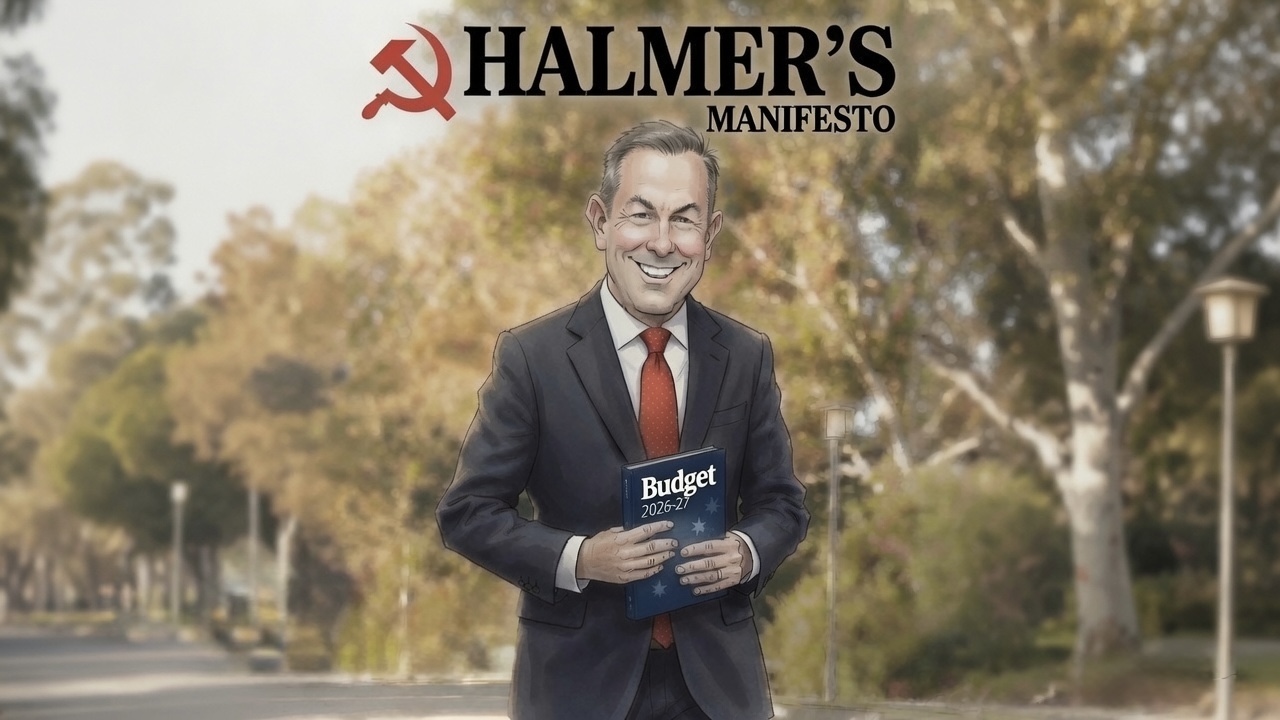
Jim Chalmers' package combines minor rate tweaks with new penalties on superannuation balances over $3 million and sweeping restrictions on negative gearing and capital gains tax from July 2027, including a sneaky 'widow's tax' on jointly owned properties
Treasurer Jim Chalmers has once again demonstrated his remarkable talent for dressing up political opportunism as bold reform. In his 2026 Budget, Chalmers has served up a tax package that offers only minor tweaks to the lowest income tax bracket while introducing new penalties on retirement savings and making property investment far less attractive. The changes, personal tax and superannuation measures kicking in from 1 July 2026, with negative gearing and capital gains tax restrictions from 1 July 2027, amount to a direct attack on the incentives that encourage Australians to save, invest and build wealth.
Chalmers has spent weeks claiming these measures deliver “tax cuts for every working Australian” and fix “intergenerational unfairness.” The actual detail reveals something far more cynical: bracket creep marches on untouched, a new tax layer is slapped on superannuation earnings above arbitrary thresholds, and negative gearing is gutted in ways that risk shrinking rental supply. This is not serious policy from a competent Treasurer. It is spin, backflips and targeted punishment dressed up as fairness.
Meagre Personal Tax Adjustments That Insult Working Australians
The headline personal tax change is a reduction in the marginal rate applying to income between $18,201 and $45,000, falling from 16% to 15% on 1 July 2026, then to 14% the following year. A new $250 Working Australian Tax Offset is also promised from 2027–28.
Chalmers parades this around as generous relief. It is nothing of the sort. The top rate stays locked at 45% plus the 2% Medicare levy. Worse, the brackets themselves remain unindexed to wages or inflation. As ordinary pay rises, more Australians slide into higher tax brackets without any real improvement in living standards. This is bracket creep by design, and Chalmers’ budget does precisely nothing to stop it.
Australia’s tax system is already steeply progressive. The top 10% of earners shoulder around 50% of all personal income tax paid. The top 5% contribute roughly 37%. Chalmers’ so-called relief for lower and middle incomes arrives while the heaviest load continues to fall on a relatively small number of higher earners. The Treasurer apparently believes Australians will thank him for these scraps while the real erosion of their pay packets continues through bracket creep and inflation. It is insulting.
The Division 296 Super Tax: Chalmers Targets People Who Did the Right Thing
From 1 July 2026, Division 296 imposes an extra 15% tax on earnings from the portion of superannuation balances above $3 million. Balances over $10 million face an additional 10% on the earnings above that level. The thresholds will be CPI-indexed in future years.
This measure is projected to hit just 80,000 to 90,000 Australians, about one in 200 people with super. Chalmers sells it as “better targeting concessions.” What it actually does is punish Australians who contributed consistently to super over decades, often through salary sacrifice and sensible investing in a system successive governments actively promoted to reduce future pension costs.
Chalmers has apparently decided that people who played by the rules, lived modestly and let compounding do its work have accumulated “too much” and must now pay more. The policy adds complexity, discourages further voluntary contributions, and makes clear that retirement savings above a politically convenient number are now fair game. Many of those affected are professionals and small business owners, not oligarchs. Treating their prudence as a revenue opportunity is both short-sighted and mean-spirited. It undermines the entire purpose of superannuation as a vehicle for personal responsibility.
Negative Gearing and CGT Changes: Chalmers Decides Investors Are the Enemy, and Slips in a 'Widow's Tax'
The most destructive parts of the package are the negative gearing and capital gains tax changes scheduled for 1 July 2027. Negative gearing will be restricted to new residential builds only. Existing properties keep grandfathered status until sold. The 50% CGT discount is replaced for existing properties with an inflation-linked version plus a minimum 30% tax rate on gains. Pre-1985 properties, long exempt, will now face CGT.
Chalmers claims this will “rebalance” the system and help first-home buyers by curbing investor demand. The evidence suggests otherwise. Investors have long financed a significant portion of new housing supply. Making existing rental properties less attractive while hiking the effective tax on gains is a recipe for reduced overall investor activity and tighter rental supply over time.
History offers a clear warning. When negative gearing was temporarily restricted in 1985–87, rents rose sharply in multiple markets. Chalmers’ changes recreate those distortions without fixing the real barriers to housing supply, planning laws, slow approvals and infrastructure failures. The package only passed after a grubby deal with the Greens that also bans self-managed super funds from borrowing for residential property. This is not housing policy. It is ideological score-settling that will likely make renting more expensive for the very people Chalmers pretends to help.
Worse still, Chalmers has quietly embedded what critics are already calling a “widow’s tax.” For jointly owned investment properties purchased before the 2026 Budget changes, the grandfathered negative gearing and CGT exemptions will disappear if one spouse dies or the couple divorces. This means surviving partners, often women who outlive their husbands, or divorced individuals could suddenly face full tax liabilities on what were previously protected assets. Labor has repeatedly and loudly ruled out introducing any form of death tax or inheritance tax. Yet through this mechanism, Chalmers and his colleagues have effectively created one for a significant group of property investors. It is a classic Labor sleight of hand: deny the label while delivering the outcome. The Treasurer’s claim that these are merely “technical alignments” collapses the moment you consider the human impact on families dealing with grief or separation.
Broken Promises, Political Deals and Desperate Spin
Chalmers has already admitted the government “lost some political paint” over its backflips on negative gearing and CGT, measures he and Labor had previously ruled out. These changes were never part of the party’s election platform, yet they now bankroll the modest worker offsets in this budget. The Treasurer’s lofty talk of “difficult but necessary reform” cannot hide the fact that this is targeted revenue collection wrapped in fairness rhetoric, complete with a backdoor death tax he insists doesn’t exist.
The pattern is consistent and revealing. Small giveaways at the bottom are funded by new taxes and restrictions on superannuation and property investment. High earners already pay the bulk of personal income tax. Rather than deliver genuine simplification and lower rates that reward effort, Chalmers has chosen to expand the state’s reach into capital and savings while introducing arbitrary thresholds and family-destroying traps that will require constant political fiddling.
The Damage Chalmers Is Inflicting
The consequences are straightforward and entirely predictable. Bracket creep will keep eating into wage growth. The superannuation changes will blunt incentives for additional saving among those nearing or above the $3 million mark. The negative gearing and CGT restrictions, including the widow’s tax on jointly owned properties, are likely to reduce new rental supply, push rents higher, and create fresh financial pain for families already navigating death or divorce. None of this boosts productivity, improves housing affordability or strengthens the budget long-term.
Jim Chalmers can call this his manifesto if it makes him feel better. Most Australians will see it for what it is: a budget from a Treasurer more interested in short-term political messaging, broken promises and punishing success than in building a stronger economy. The package offers crumbs to some while reaching deeper into the pockets and plans of those who have saved responsibly and invested in housing, and now even punishes surviving spouses with what amounts to a stealth death tax. It weakens incentives, distorts markets and reveals a government that views wealth creation with suspicion rather than as the foundation of national prosperity.
This is not reform. It is opportunism and hypocrisy, and Chalmers should be called out for it.